Archives
- 2026-04
- 2026-03
- 2026-02
- 2026-01
- 2025-12
- 2025-11
- 2025-10
- 2025-09
- 2025-03
- 2025-02
- 2025-01
- 2024-12
- 2024-11
- 2024-10
- 2024-09
- 2024-08
- 2024-07
- 2024-06
- 2024-05
- 2024-04
- 2024-03
- 2024-02
- 2024-01
- 2023-12
- 2023-11
- 2023-10
- 2023-09
- 2023-08
- 2023-06
- 2023-05
- 2023-04
- 2023-03
- 2023-02
- 2023-01
- 2022-12
- 2022-11
- 2022-10
- 2022-09
- 2022-08
- 2022-07
- 2022-06
- 2022-05
- 2022-04
- 2022-03
- 2022-02
- 2022-01
- 2021-12
- 2021-11
- 2021-10
- 2021-09
- 2021-08
- 2021-07
- 2021-06
- 2021-05
- 2021-04
- 2021-03
- 2021-02
- 2021-01
- 2020-12
- 2020-11
- 2020-10
- 2020-09
- 2020-08
- 2020-07
- 2020-06
- 2020-05
- 2020-04
- 2020-03
- 2020-02
- 2020-01
- 2019-12
- 2019-11
- 2019-10
- 2019-09
- 2019-08
- 2019-07
- 2019-06
- 2019-05
- 2019-04
- 2018-11
- 2018-10
- 2018-07
-
EW-7197 Within the Class II receptors the Type I
2020-09-14

Within the Class II receptors, the Type I IFN receptor subunit, IFNAR-1, is exceptional in having four tandem FNIII domains, denoted here D1–D4. This structure appears to have arisen as a tandem EW-7197 of the basic D1/D2 structure; thus, D1 and D3 of IFNAR-1 are more closely related, as are D2 and
-
Taken together our results demonstrate that
2020-09-14

Taken together, our results demonstrate that the changes of striatal dopamine release and locomotor activity observed following chronic nicotine treatment and consequent acute withdrawal are mediated by CRF1, but not CRF2. Previous studies have already indicated that blocking CRF1 would prevent some
-
br Roles of ERR in Physiology and Disease br
2020-09-11
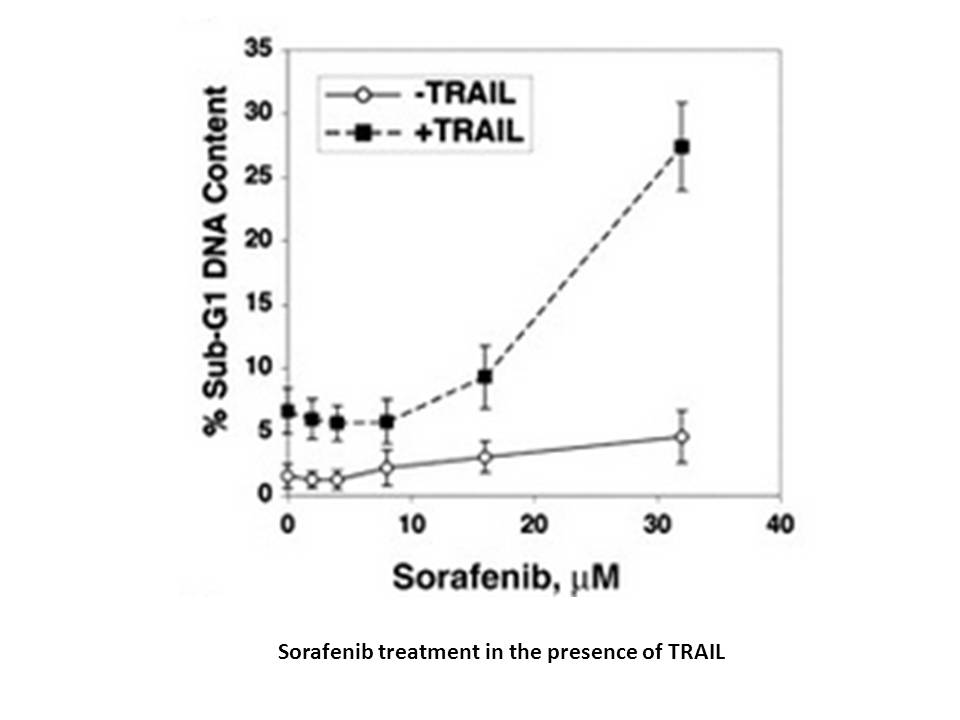
Roles of ERRγ in Physiology and Disease Concluding Remarks and Future Perspectives Over the last decade, the generation of tissue-specific ERRγ transgenic or knockout mice and the use of synthetic ligands have rapidly advanced our understanding of the roles of ERRγ in cellular functions, altho
-
The ADME profile of AAT was very promising with high
2020-09-11

The ADME profile of AAT-008 () was very promising, with high stability in HLM. The pre-clinical pharmacokinetic properties of AAT-008 were also assessed in rats (Sprague-Dawley, male), dogs (beagle, male), and monkeys (cynomolgus, male). The experimentally determined parameters are summarized in .
-
br Experimental Procedures DNA synthesis
2020-09-11
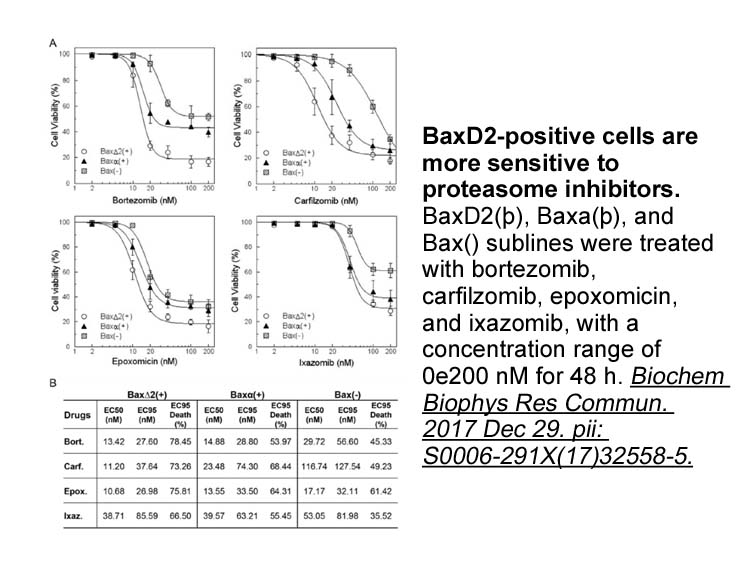
Experimental Procedures DNA synthesis reagents were purchased from Glen Research (Sterling, VA). A solution of 0.1 M triethylamine acetate (TEAA) (pH 6.5) was used as HPLC buffer A, and HPLC-grade acetonitrile from Oceanpak (Sweden) was used as HPLC buffer B. All other chemicals were obtained fro
-
On top of the hardware ASTS employs
2020-09-10
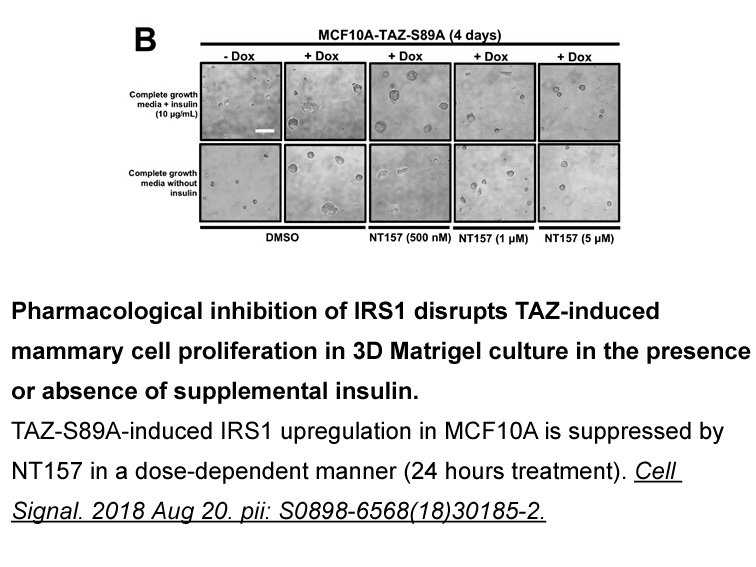
On top of the hardware, ASTS employs Linux SUSE with High-Availability (HA) Extension: a COTS OS provided with two clustering software (Pacemaker Cluster Resource Manager (CRM) and Corosync) responsible for resources orchestration, failure diagnosis, nodes coordination, and fail-over management. The
-
The aim of the present study was to investigate
2020-09-10
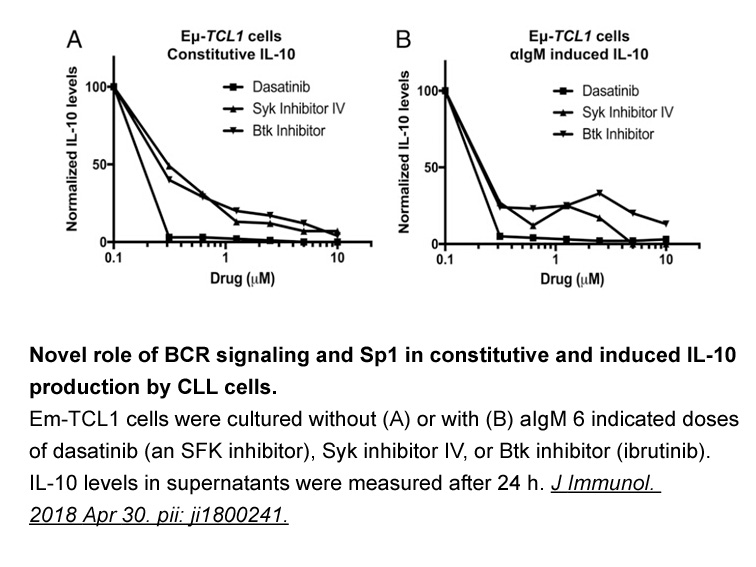
The aim of the present study was to investigate the acute effects of THC on resting state topoisomerase inhibitors neurophysiology, and to examine the impact of COMT genotype on these effects. Thirty-nine healthy volunteers participated in a randomised, placebo-controlled, crossover pharmacological
-
Recently we have created CRISPR Cas
2020-09-10
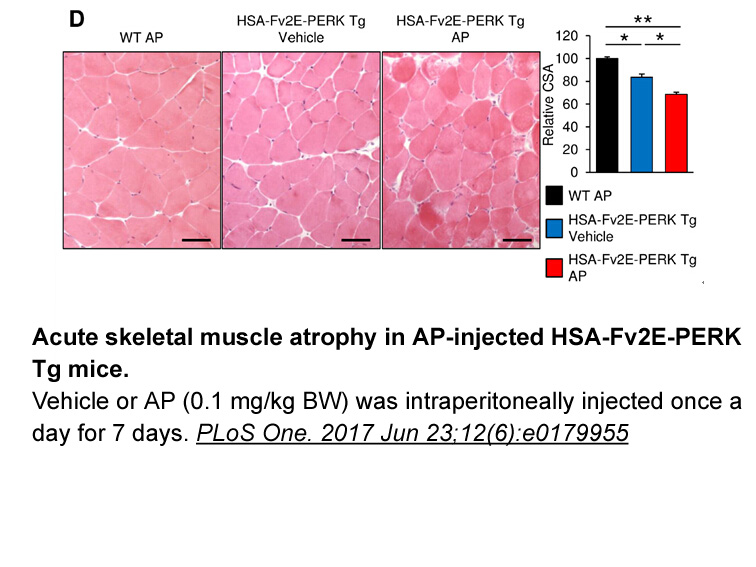
Recently, we have created CRISPR/Cas9-mediated col14a1a knockout fish to interrogate the function of col14a1a during regeneration using the caudal fin model. Using AFM, we showed that collagen XIV-A transiently acts as a molecular spacer responsible for BM biomechanics possibly by helping laminins i
-
We have previously reported that CK is
2020-09-10
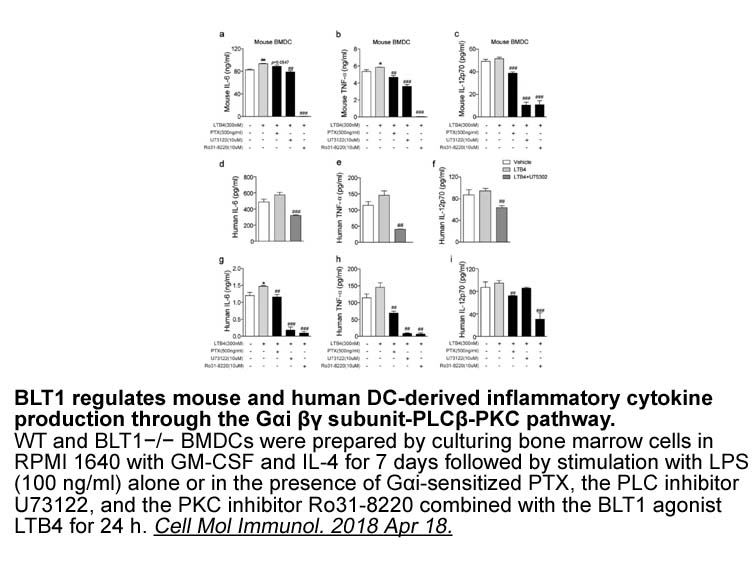
We have previously reported that CK2 is downregulated in senescent human lung fibroblast IMR-90 cells, aged rat tissues, and aging nematodes [17,18]. CK2 downregulation induces cellular senescence via the PI3K-AKT-mTOR-reactive oxygen species-p53-p21Cip1/WAF1 pathway in human cells [[19], [20], [21]
-
The second part of this study evaluated the role of
2020-09-10
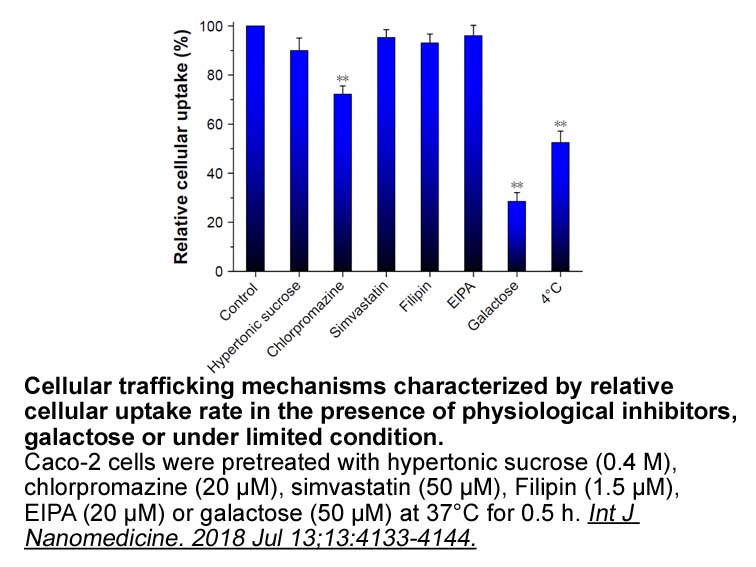
The second part of this study evaluated the role of CK1 in the eFABP4 cellular uptake in endothelial cells. By blocking CK1 expression using a specific siRNA, we corroborated that the presence of CK1 was fundamental for FABP4 cellular uptake and internalization in endothelial cells, thus decreased m
-
In view of the hypotensive effect of endothelial specific ov
2020-09-10
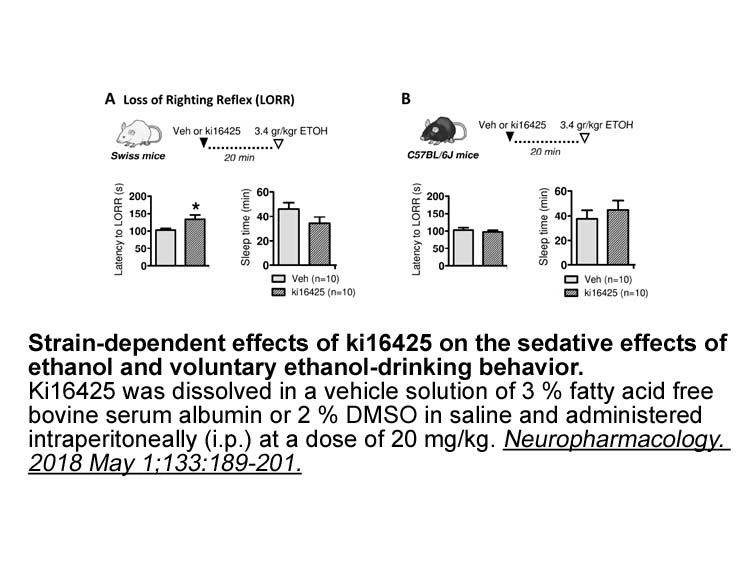
In view of the hypotensive effect of endothelial-specific overexpression of eNOS [17], [19], [28] we correlated skeletal muscle eNOS expression with sBP including data on colony 5 of eNOS-Tg [17] which was used to generate eNOS-Tg/KO (Fig. 4D). We found a highly significant one phase exponential dec
-
Pyrazolopyrimidines are bioisostere of purine exhibit promis
2020-09-10
Pyrazolopyrimidines are bioisostere of purine exhibit promising antitumor activity by competitively binding to the ATP active site of different kinase dihydrofolate reductase inhibitor [16,17]. Several compounds of this family were found to induce apoptosis and/or reduce cell proliferation in variou
-
The most important cytotoxic lesion formed by the nitrogen
2020-09-10

The most important cytotoxic lesion formed by the nitrogen mustards is generally considered to be the DNA–DNA interstrand cross-link 12, 13. DNA–DNA interstrand cross-links are thought to exert their cytotoxic effects by inhibiting DNA duplex strand separation, progression of the Desformylflustrabro
-
Programmed cellular death or apoptosis is a
2020-09-09
Programmed cellular death or apoptosis is a process genetically controlled that plays an important role in cellular homeostasis, being an important defense mechanism to remove cells that have been infected, damaged or mutated (Smith and Smith, 2012, Wlodkowic et al., 2011). Nevertheless, apoptosis s
-
The ability of minor groove binding agents to
2020-09-09

The ability of minor groove binding agents to inhibit the activity of DNA helicases is not without precedence. Similar effective inhibition of the unwinding of DNA by the BLM and Werner\'s DNA helicases by the minor groove binder distamycin A has been observed. Further, and similar to RecBCD, interc
15948 records 782/1064 page Previous Next First page 上5页 781782783784785 下5页 Last page